Tuesday, May 12, 2020

western civ day fifty

  • Tarquin seized power the old fashioned way
    • Tarquin's grandfather died
    • The grandfathers wife liked Servius Tullias more than her own kids so named him king
    • Servius's daughter marry two men (Tarquin and another)
    • One of the daughters (Tullia) kills her sister and husband which led her to marry Tarquin
    • Tullia tells Tarquin to take the throne from her father so he does and then orders her father to be assassinated
    • Tullia runs over he dads dead body with a carriage 
    • Tarquin assassinates senators who object 
    • Tarquin's son Sextus forces himself on Lucretia- she refuses and he threatens to kill her 
    • Lucretia gives into the blackmail and then ends up committing suicide 
    • Tarquin tried to hide it all but the poeple caught on and ordered him and his family out of Rome
  • The behavior of this family made the people of Rome never want to be ruled under a tyrant or king again

  • consuls are elected officials
  • term of office: one year 
  • always patricians
  • duties: dealing justice, making law, commanding the army
  • Rome and US 
    • Both had 3 branches- executive, legislative, and judicial 
    • Both have legal code
      • Executive- Rome- 2 consuls, 1 year terms, and controlled the military
      • Executive- US- President and VP, 4 year terms, and commander in chief of military
      • Legislative- Rome- 300 officials, aristocrats, members for life, and assemblies had 193 members 
      • Legislative- US- 100 senators, 6 year terms, and a house of representatives with 435 members 
      • Judicial- Rome- Praetors with one year terms
      • Judicial- US- supreme court, nine members, lifetime terms, and they were appointed by the president 
      • Legal code- Rome- Twelve Tables
      • Legal code- US- Bill of Rights


Friday, May 8, 2020

western civ day fourty-nine

STUDY GUIDE
  • Etruscans settled Rome
    • Came from the north-central part of peninsula
    • Metalworkers, artists, and architects 
  • Two fundamental myths
    • Virgils Aeneid (where Aeneas escapes from Troy)
    • Story of Remus an Romulus 
  • Greeks also settled Rome
    • colonies around the Mediterranean Sea
  • Romans borrowed these ideas from the Greeks
    • religious beliefs
    • alphabet
    • art
    • military techniques and weaponry
  • Latins were the FIRST settlers
    • descendants of Indo-Europeans 
    • settled on the banks of the Tiber
    • trading ships could navigate as far as Rome
    • commercial port- not susceptible to attack
    • built on seven hills- Aventine, Caelian, Capitoline, Esquiline, Palatine, Quirinal, and Viminal
  • Remus wanted Aventine
  • Romulus chose Palatine
  • Many streams flowed into the Tiber 
  • Marshy area called the Forum- between Palatine and Capitoline Hills
  • Tarquin the Proud's grandfather built the Cloaca Maxima (largest ancient drain), which channeled water into the Tiber
  • Constitution Avenue in D.C is located on what used to be Tiber Creek
  • Lucias Tarquinias Superbus
    • Seventh and final king of Rome
    • known as Tarquin the Proud
    • true tyrant, in the old and modern sense 

Thursday, May 7, 2020

western civ day fourty-eight

I loved the song Rome by Chi Cago. It followed the same beat and tune as the original song Low by Flo Rida. I also liked how it was by Chi Cago which when you put it together it says Chicago and when you put Flo Rida it spells Florida. The lyrics were very catchy and still related to Rome. I am disappointed that we didn't have school because it would have been funny to watch you sing it. I think I could remember some of the song because of the catchiness which could help me with Rome.

Monday, May 4, 2020

western civ day fourty-seven

In 451 B.C., ten men began writing down the laws onto 12 tablets. The Twelve Tables was a compilation of existing laws. The laws were originally carved onto wooden tablets and set up for public display they were then upgraded to bronze. Romans memorized the contents. The Twelve Tables were easily and always being added to. The tablets hung in the forum for the public, they were the basis for Roman law. The Twelve Tables established the idea that all free citizens had the right to be protected by the law. This was a big accomplishment for the plebeians because it meant the patricians couldn't change the law to only benefit themselves.

Friday, May 1, 2020

western civ day fourty-six

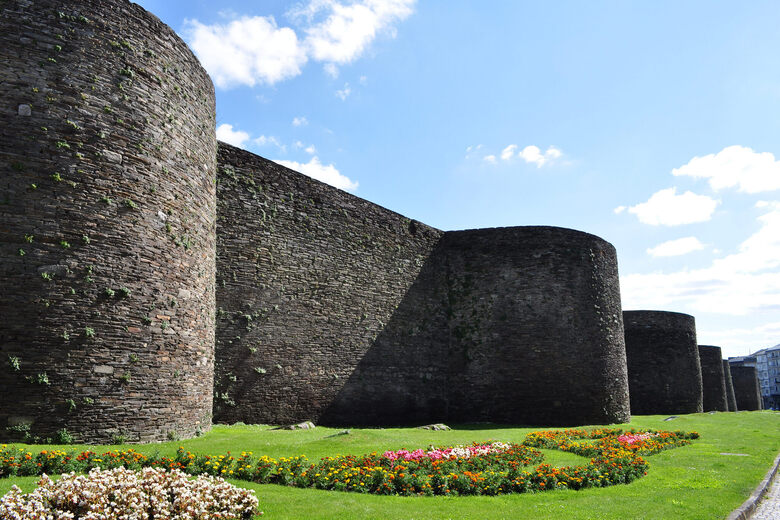
Roman Walls of Lugo – Lugo, Spain - Atlas Obscura
This is the Roman city walls of Lugo. These walls were built between 263 and 276 B.C. These walls were built to protect roman city, Lugo, from German invaders and local tribesman. The length of the wall was 6,960 ft and the height varied between 26 ft and 39 ft. There are 10 gates and 85 towers still in tact today. The wall is in pretty good shape. The wall was built from stone slate and some granite.

Thursday, April 30, 2020

western civ day fourty-five

The plebeians are the working class and the majority of the people. They have to work hard for everything they receive and nothing is just handed to them. The patricians inherit money and fame and "the name". The patricians only make up a small percent of the citizens. They are more of the politicians and lawyers. The plebeians do all the hard work and make everything for the patricians to get no respect from them. The patricians want everything for themselves and since they are the politicians they don't give the plebeians many rights. The greek definitions are; plebeians- the common farmers, artisans, and merchants who made up the majority of the population. Patricians- wealthy landowners who held most of the power.  

Tuesday, April 28, 2020

western civ day fourty-four

Republic- a form of government in which power rests with citizens who have the right to vote for their leaders
Patricians- wealthy landowners who held most of the power
Plebeians- the common farmers, artisans, and merchants who made up the majority of the population
Tribune- representatives- protected the rights of the Plebeians from unfair acts of Patrician officials
Consuls- command the army and directed government- limited power- serve for one year
Senate- aristocratic branch- both legislative and administrative functions- influence over foreign and domestic policy
Dictator- a leader who had absolute power to make laws and command the army- power lasted 6 months- elected by Senate; chosen by consuls
Legions- large, organized unit of Roman soldiers
Punic Wars- 264- 146 BC- Rome and Carthage fought 3 wars
Hannibal- Carthinagin general- brilliant military strategist